
The Best Sweaters Under $100
Under $100 the question is not whether a sweater will wear out but how gracefully. These are the ones where the trade is worth making, with the failure named up front. Already own a sweater that fits? Compare against it.
11 picks from 3,000+ brands19,492 owner comments readChest, length & shoulder from makers' flat chartsHow we choose →
Disco pick

Best value
Uniqlo
Merino Sweater · $39.90
Crewneck · Merino
Why it wins
Thin and it will pill, but nothing else at $40 is honest merino. Replace rather than repair.
Merino · fine knit
Find my size →
More recommendations

L.L.Bean
Heritage Honeycomb Sweater · $79.95
Crewneck · Lambswool
Why we picked it
Dull, durable, and returnable. For many people that is the whole specification.
Lambswool · mid knit
Find my size →
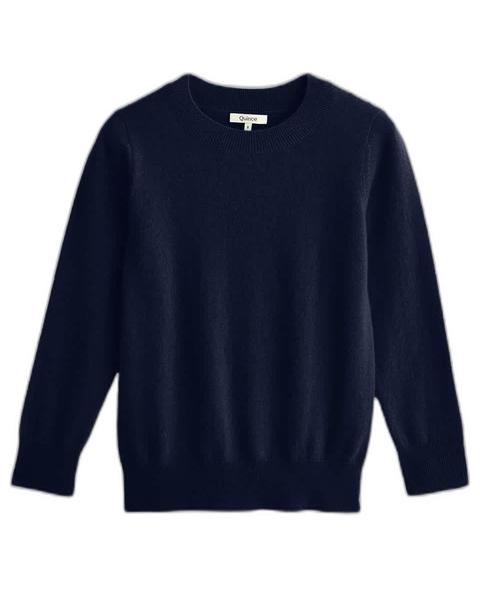
Quince
Mongolian Cashmere Crewneck Sweater · $59.90
Crewneck · Cashmere
Why we picked it
Real cashmere at $60, tired by spring. Fine if you know that going in.
Cashmere · mid knit
Find my size →
How we picked these
Updated October 8, 2026.
7 of the 11 are corroborated by owner reports gathered from 19,492 comments across 200 discussion threads; 4 (Norse Projects, SANVT, ASKET, Colorful Standard) are the editor's, chosen for what their makers disclose. Sweaters generate far less discussion than boots or jeans — the best-supported sweater here draws 22 separate recommendations, where the same method gave one boot 294 — so read this as a considered shortlist rather than a verdict.
Every price was checked on the maker's own site on the date above. Where a maker sells only in euros or pounds we show that price, with our dollar conversion beside it. Picks are chosen on merit, including the ones Disco earns nothing from.
The fibre on the label decides less than you think
Reading roughly sixty brands' own product pages for this list turned up the opposite of what the category's reputation suggests. A $60 cashmere crew publishes its micron, fibre length, grade, origin and gauge; several costing more than $700 publish nothing beyond the words 100% cashmere. Uniqlo states the same 19.5 micron figure ASKET does, at a fifth of the price. Across all of them, only four named the mill that spun their yarn, and a garment weight is almost never given at all. So this page records what each maker actually discloses, marks the gaps as gaps, and compares sizes only on charts that measure the garment itself, never a to-fit body chart.
Sweater FAQs
Does 100% cashmere mean a sweater is high quality?
No. It tells you the fibre content meets the legal definition and nothing else. It does not tell you the average fibre diameter, the fibre length, how the yarn was spun, how densely it was knitted or how it was finished — and those are what decide how it feels and whether it pills. Reading brands' own pages in September 2026, the most specific cashmere page we found belonged to a $60 sweater, and several costing more than $700 published nothing beyond the words 100% cashmere.
Is a finer micron always better?
Finer fibres generally feel softer against skin, which is why fine merino and cashmere are used next to the body. But a slightly coarser wool can be the right choice for a sweater meant as an outer layer, where loft, density and durability matter more than softness. Micron is a specification, not a score.
Does more ply mean a better sweater?
No. Ply describes how many strands of yarn are twisted together, not how good they are. A fine four-ply yarn and a heavy two-ply yarn produce completely different garments, and neither is automatically superior. Ply is only meaningful alongside the yarn count and the gauge, which most brands do not publish.
What does gauge mean, and is higher better?
Gauge is roughly the number of needles across an inch of the knitting machine, so a higher gauge makes a finer knit and a lower one makes a chunkier knit. It is a design decision, not a quality ranking. A 7 gauge Shetland and an 18 gauge merino are aiming at different jobs.
Does pilling mean a sweater is badly made?
Not on its own. Pilling happens when short fibres work loose and tangle, and it is affected by fibre length, fibre diameter, yarn twist, how the fabric is constructed and how much the garment rubs in real wear. Light early fuzzing that settles is normal, particularly on softer woollen-spun yarns. Persistent heavy pilling, or a surface that deteriorates quickly, is the signal worth acting on.
Why do two sweaters with the same chest measurement look completely different?
Because chest only tells you how wide a sweater is, not how that width is distributed. Body length, shoulder construction, sleeve volume and the tension of the hem rib decide whether a sweater hangs straight, blouses over the waist or reads as cropped. A drop-shoulder knit and a set-in-sleeve knit with identical chest figures are not the same garment, and you cannot get from one to the other by changing size.
How should I measure a sweater I already own?
Lay it flat without stretching the knit, and measure chest pit to pit, body length from the centre back of the neck to the hem, and sleeve from the shoulder seam to the cuff. Then compare like with like: check whether the brand measures its sleeve from the shoulder or from the centre back of the neck, because those differ by six inches or more and a great many charts do not say which they use.
This is a filtered view of our full sweaters research. All 11 picks →
Something lighter underneath? The best t-shirts for men →
Sorting out the bottom half? The best casual pants for men →
Standing on something? The best boots for men →