Compare
Muji vs Uniqlo
Two Japanese low-to-mid basics labels: Muji sells undyed, boxy cotton alongside furniture and food; Uniqlo sells engineered fabrics and trim, fit-driven staples at global scale.
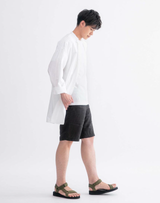 MujiTokyo · $$
Choose Muji for boxy undyed cotton, wide-leg trousers and washable knits bought as quiet, unbranded wardrobe filler.
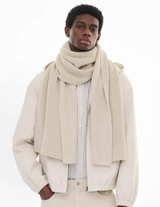 UniqloYamaguchi · $$
Choose Uniqlo if you want trim, technical staples — Heattech, AIRism, down — plus Lemaire-designed U and UT graphics.
At a glance
| Muji | Uniqlo | |
|---|---|---|
| Origin | Tokyo, Japan | Yamaguchi, Japan |
| Founded | 1980 | 1984 |
| Made in | China | Vietnam |
Only rows where the two actually differ are shown.
Style comparison
Athleisure / Sportswear
Workwear / Heritage
Urban prep / Ivy
Positions come from how strongly each brand is tagged to a style across its range — directional, and only the axes that separate them are drawn.
How the fits differ
Muji
slightly small
Muji garments are cut in Japanese proportions, so while the silhouettes look boxy and relaxed, the actual grading tends to run about a size small for Western frames, with tight shoulders and short sleeves being the common complaint.
Uniqlo
slightly small
Most shoppers find Uniqlo cut on Japanese proportions — slightly trim and short in the body and sleeve — so the common move is to take one size up from your usual US/EU size, while the oversized collections fit as labelled or larger.
Somewhere between Muji and Uniqlo?
Brands the graph puts close to both.