Italian Collar Shirt
URU's relaxed, one-piece open-collar shirt is the label's clearest expression of Urushiyama's pattern-making — a classic menswear staple redrawn in a drapey, oversized cut.
Explore Italian Collar Shirts → disco
discoBrand profile
Tokyo menswear label by Masaharu Urushiyama, known for relaxed oversized tailoring, muted palettes and pattern-making-led drapey silhouettes.
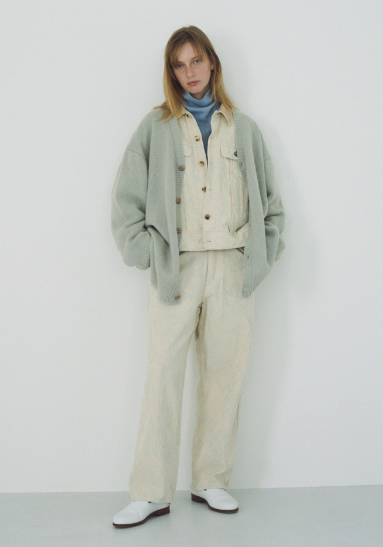
Urushiyama comes from a pattern-cutting background, and it shows in unstructured blazers, wide trousers and coats built to drape rather than hold a fixed shape.
Collections stay in neutral tones and oversized, often gender-neutral silhouettes, with knits and outerwear meant to be worn in layers rather than read as seasonal trend.
The high price tier reflects Japanese fabric development and cut, not logos; it began as AMAZE for FW2010 and became URU a year later, selling through select boutiques.
URU's relaxed, one-piece open-collar shirt is the label's clearest expression of Urushiyama's pattern-making — a classic menswear staple redrawn in a drapey, oversized cut.
Explore Italian Collar Shirts →Soft, chunky knitwear in muted neutrals is central to URU's layered, comfort-first wardrobe.
Explore V Neck Knit →Available atHAVEN
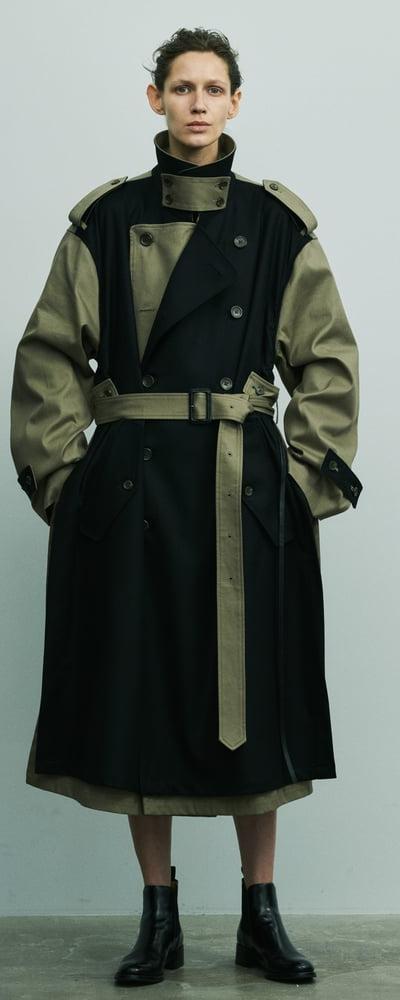 88% match
Tokyo genderless minimalism in odd Japanese fabrics
What changes: Cooler, more conceptual and less classic-tailoring driven
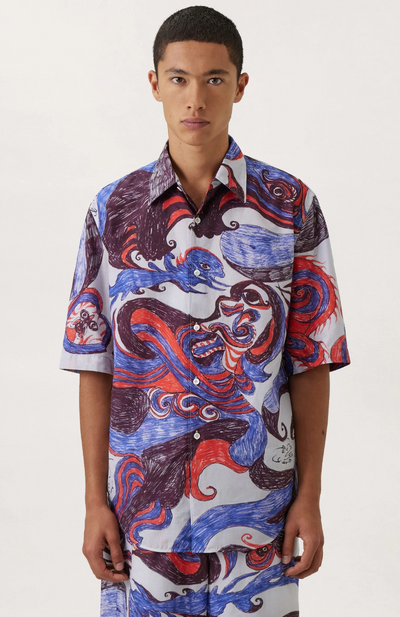 84% match
Softer Parisian take on relaxed androgynous tailoring
What changes: Bigger house, higher price, leather goods and accessories
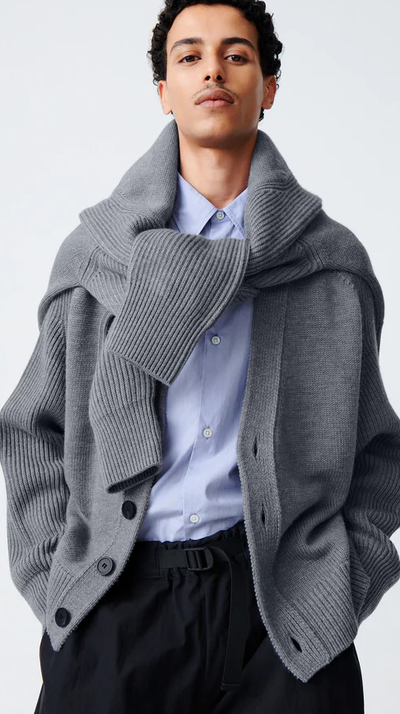 80% match
Modular volume-led menswear, more disciplined palette
What changes: British utilitarian uniform logic rather than pattern-cutter craft
 75% match
Seasonless, material-first minimalism in muted neutrals
What changes: Fewer pieces, tighter fabric-focused range, no tailoring theatrics
URU TOKYO is the Tokyo menswear label of designer Masaharu Urushiyama, started for Fall/Winter 2010 under the name AMAZE and renamed URU from Fall/Winter 2011. Working from a pattern-making background, Urushiyama reworks classic menswear into relaxed, oversized shapes: unstructured blazers, wide trousers, anoraks, coats and chunky knits in muted, mostly neutral palettes. Collections emphasise Japanese fabric development, layering and comfort over trend, with drapey, frequently gender-neutral silhouettes, and sell through select Japanese and international boutiques.