Zip Trousers
Watertight welded zips running the length of the leg are the brand's clearest signature, turning technical utility hardware into a queer-coded silhouette.
Explore Zip Trousers → disco
discoBrand profile
London label reworking workwear, military and rave uniforms into queer-coded technical menswear defined by hardware detailing and "luxury utility" construction.
4 brands like Olly Shinder like Kiko Kostadinov, POST ARCHIVE FACTION (PAF), HYEIN SEO →

Olly Shinder is a London menswear label founded in 2022 by its namesake designer immediately after he graduated from Central Saint Martins' BA programme. It reworks uniform archetypes — workwear, military kit, emergency services and sportswear — through a queer lens, combining technical fabrics, lingerie-level textiles, watertight zips and exposed hardware into what Shinder terms "luxury utility." The brand has been part of Dover Street Market Paris's Brand Development incubator since its first season and showed with Fashion East from SS24. Stockists include SSENSE, Machine-A, Très Bien, H.Lorenzo and Dover Street Market globally.
Watertight welded zips running the length of the leg are the brand's clearest signature, turning technical utility hardware into a queer-coded silhouette.
Explore Zip Trousers →A uniform archetype reworked season after season, the Scout Shorts distill Shinder's fixation on youth-organisation and emergency-services kit.
Explore Scout Shorts →The exposed multi-zip outerwear piece is the fullest expression of Shinder's "luxury utility" approach to military and workwear outerwear.
Explore Quad Zip Jacket →Available atSSENSE
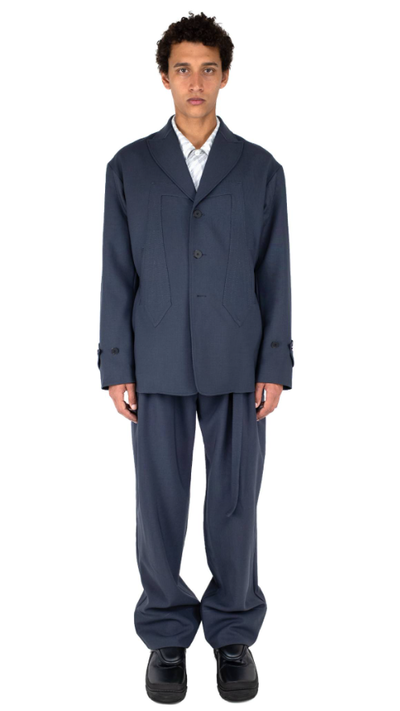 80% match
London technical panelling with a uniform-study bent
What changes: Less overtly queer-coded; broader womenswear and sneaker output
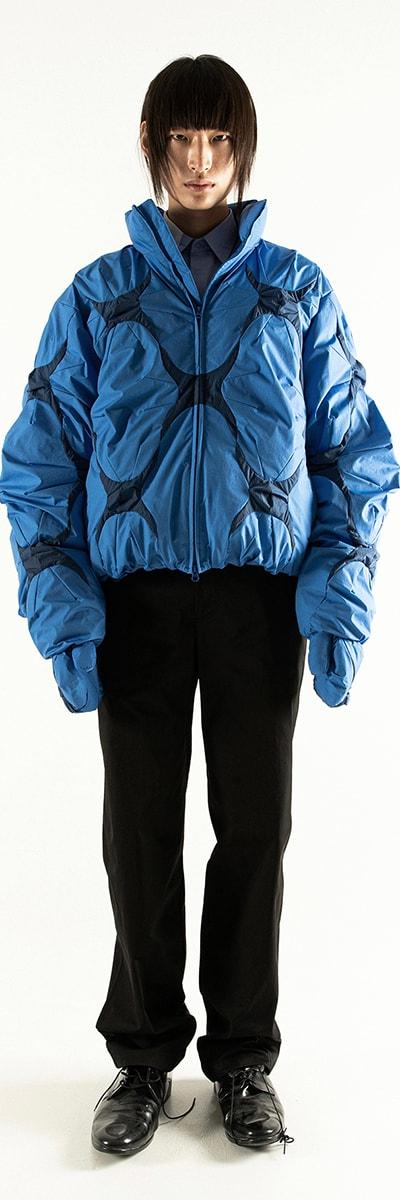 78% match
Engineering-led deconstruction of technical outerwear
What changes: Industrial-design rigour over subculture and club references
 75% match
Harnesses, straps and club-punk hardware on lean silhouettes
What changes: Streetwear graphics rather than uniform archetypes
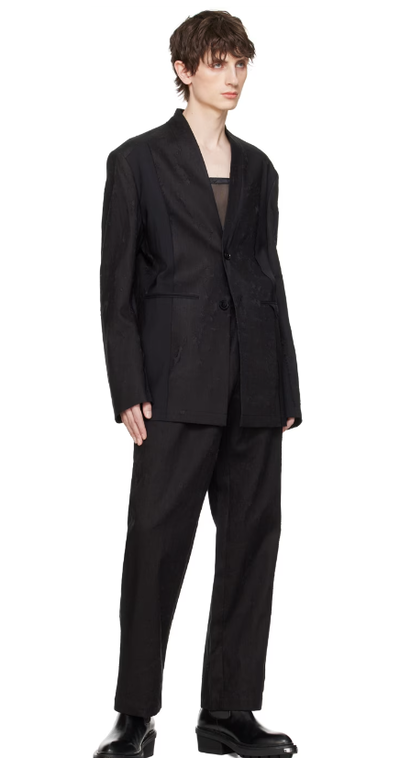 71% match
London deconstruction with gender-fluid utility layering
What changes: Conceptual patchwork focus, less fetish-adjacent hardware