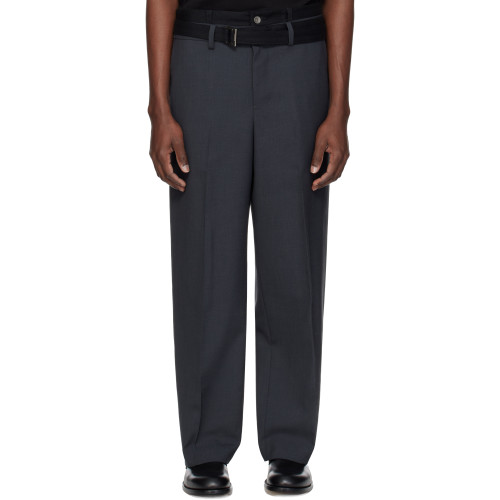
Spliced Suiting Blazer
Tailoring grafted onto nylon twill bombers and denim is Chitose Abe's core hybridization move, and it anchors the brand's suiting offering.
6 live now · from $289
Explore suiting hybrids → disco
discoBrand profile
Tokyo label by Chitose Abe that hybridizes contrasting fabrics and garment archetypes into spliced tailoring, knitwear and outerwear.
27 brands like Sacai like kolor, Junya Watanabe, Comme des Garçons →
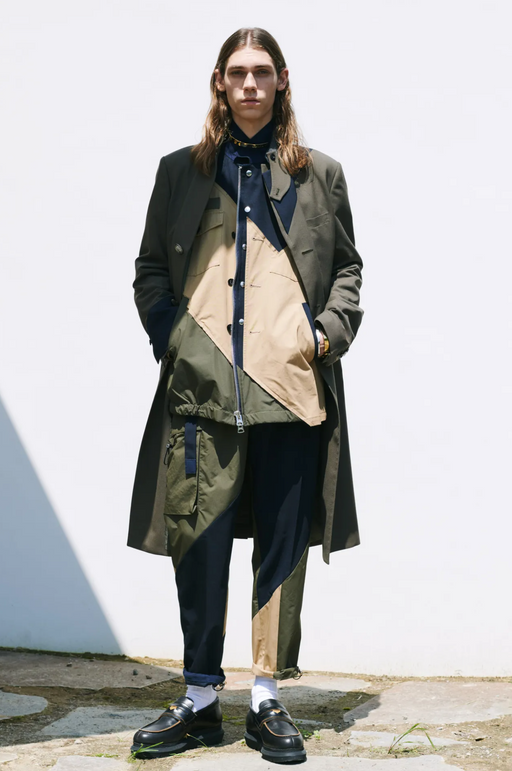
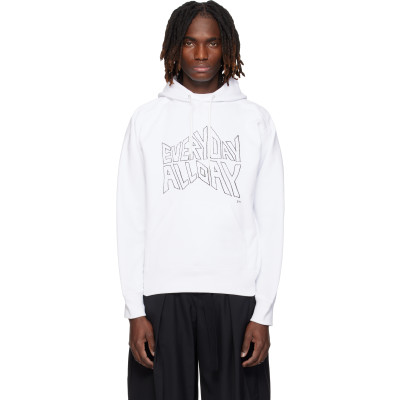
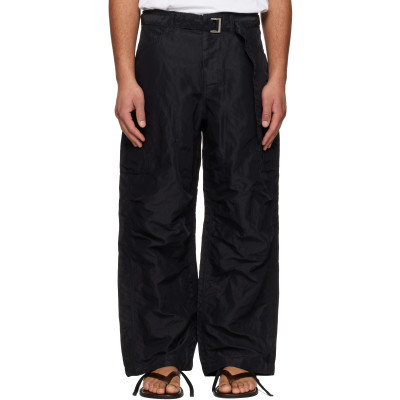
Nearly every piece is a hybrid: bombers grafted onto tailoring, pleated panels fused to knitwear, cargo pants that unfold into skirts.
Chitose Abe worked under Rei Kawakubo and Junya Watanabe before founding sacai in 1999; the company is still private and founder-led.
Jackets and coats are the core of the line, and the construction — multiple fabrics and archetypes per garment — is where the high pricing sits.
Tailoring grafted onto nylon twill bombers and denim is Chitose Abe's core hybridization move, and it anchors the brand's suiting offering.
6 live now · from $289
Explore suiting hybrids →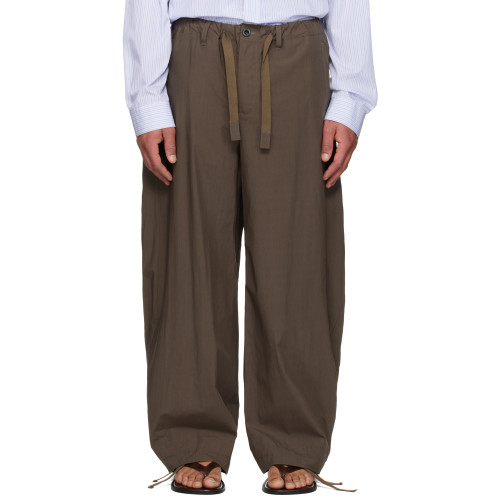
The crisp typewriter-cloth jackets, blazers, shirts and pants are a recurring sacai fabric signature, often spliced with jersey.
1 live now · from $630
Explore Typewriter cloth →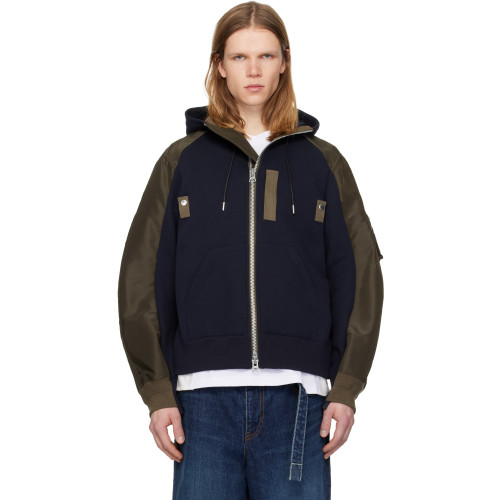
sacai's sponge sweat hoodies and sweatshirts, frequently fused with nylon twill panels, are the label's best-known everyday hybrid.
2 live now · from $406
Explore Sponge Sweat →Available atSSENSE · HAVEN
Overall fit
runs small
sacai uses Japanese numeric sizing (1–5) that generally runs small against US/EU labels, so buyers typically size up one, even though the finished silhouettes themselves look oversized and layered.
Tip: Most shoppers take one size up from their usual (a sacai 3 tends to land like a standard M/L), and up two if you have broad shoulders or want to layer.
Medium confidence · based on 18 sources
By category
| Category | Runs | Shape | Size advice |
|---|---|---|---|
| Hoodies & sweatshirts | runs small | Oversized and blousy through the body, frequently with pleated or knit panels adding volume | Take one size up; a sacai 3 is the common pick for a typical medium wearer. |
| Shirts & overshirts | runs small | Relaxed body with narrow shoulders and armholes; hybrid panels can make the hem much fuller than the chest | Size up one if you're between sizes or want room across the shoulders. |
| Trousers & pants | slightly small | Generally relaxed to wide, sometimes with wrap, skirt or cargo panels that add bulk | Order your usual waist or one up, and plan on a hem for anything under about 6ft. |
| Jeans & denim | mixed | Usually relaxed or wide-leg denim, sometimes spliced with contrast panels | Treat them like the trousers: usual waist or one up, and expect a wide leg. |
| Jackets | runs small | Oversized and sculptural overall but cut with a high, narrow armhole and close shoulder | Size up one — two if you intend to layer knitwear underneath — and check shoulder width first. |
| T-shirts & graphic tees | runs small | Boxy through the body with a comparatively slim shoulder and sleeve | Size up one from your usual tee size unless you want a close chest fit. |
Directional fit consensus summarized from public sources with AI — a starting point, not a guarantee. Confirm with the product's own measurements before buying.
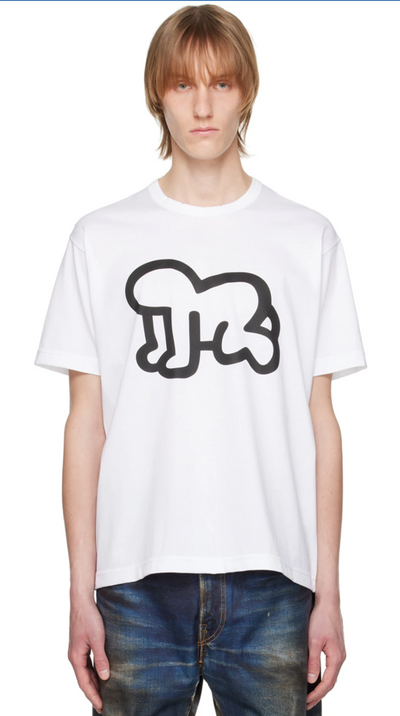
 90% match
Spliced, colour-blocked hybrids from the other Abe
What changes: More colour-play and less tailoring formality
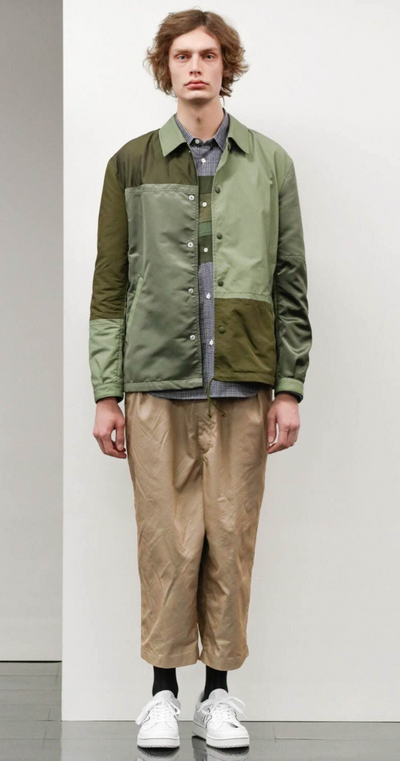
 88% match
Patchworked archetype mashups with technical fabrics
What changes: Heavier workwear/military sourcing, less refined tailoring
 83% match
The pattern-cutting lineage Abe trained inside
What changes: More conceptual and sculptural, less wearable hybrid
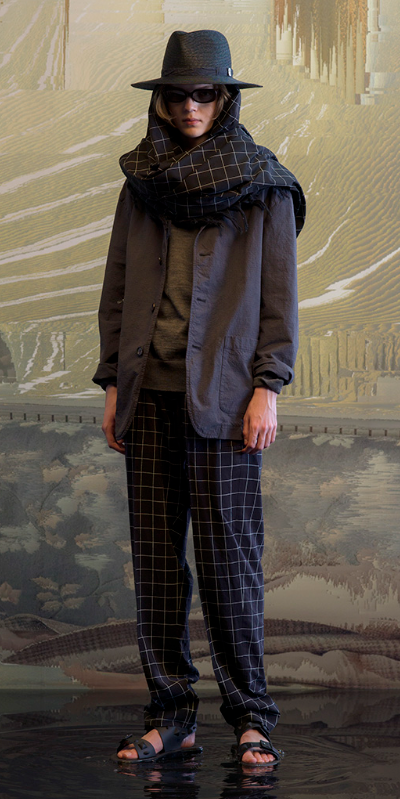 78% match
Tokyo deconstruction with punk and narrative graphics
What changes: Subculture storytelling over fabric splicing
Sacai runs small. Most shoppers take one size up from their usual (a sacai 3 tends to land like a standard M/L), and up two if you have broad shoulders or want to layer. sacai uses Japanese numeric sizing (1–5) that generally runs small against US/EU labels, so buyers typically size up one, even though the finished silhouettes themselves look oversized and layered.
sacai uses Japanese numeric sizing (1–5) that generally runs small against US/EU labels, so buyers typically size up one, even though the finished silhouettes themselves look oversized and layered. Overall shape: Conceptual and layered rather than body-following — most pieces read oversized or voluminous through the body and hem, but the shoulders, chest and armholes are cut on a narrow Japanese block.
Sacai hoodies & sweatshirts runs small. Take one size up; a sacai 3 is the common pick for a typical medium wearer. Shape: Oversized and blousy through the body, frequently with pleated or knit panels adding volume.
Sacai shirts & overshirts runs small. Size up one if you're between sizes or want room across the shoulders. Shape: Relaxed body with narrow shoulders and armholes; hybrid panels can make the hem much fuller than the chest.
Sacai trousers & pants fits slightly small. Order your usual waist or one up, and plan on a hem for anything under about 6ft. Shape: Generally relaxed to wide, sometimes with wrap, skirt or cargo panels that add bulk.
sacai is the Tokyo label Chitose Abe founded in 1999 after years working under Rei Kawakubo and Junya Watanabe. It builds clothes through hybridization, splicing contrasting fabrics and garment archetypes into single pieces: bombers grafted onto tailoring, pleated panels fused to knitwear, cargo pants that fold into skirts. Abe shows co-ed collections in Paris, framing Autumn 2026 around what she calls the beauty of destruction. Recent collaborations include Carhartt WIP, UGG and a third footwear capsule with J.M. Weston. The company remains private and founder-led.